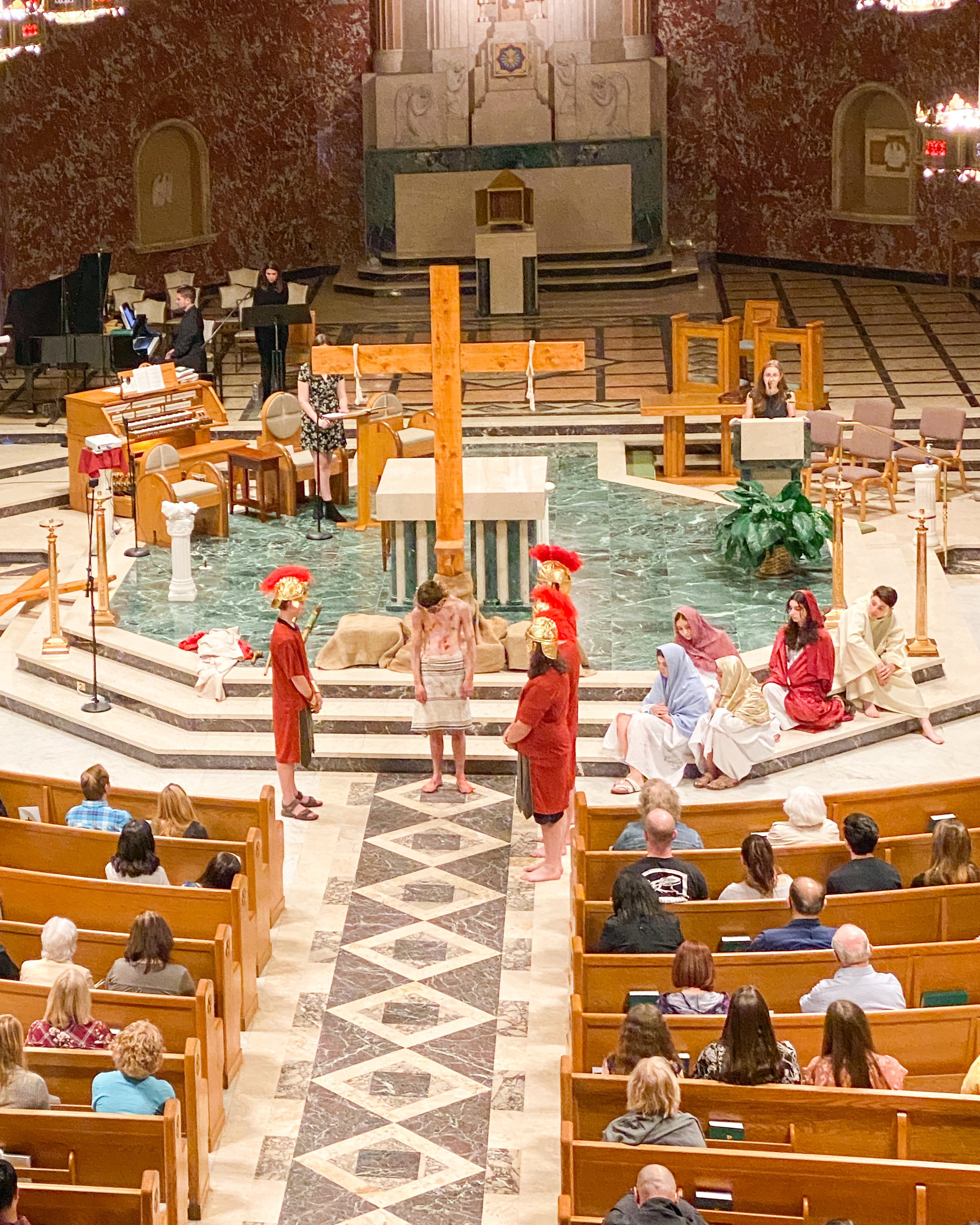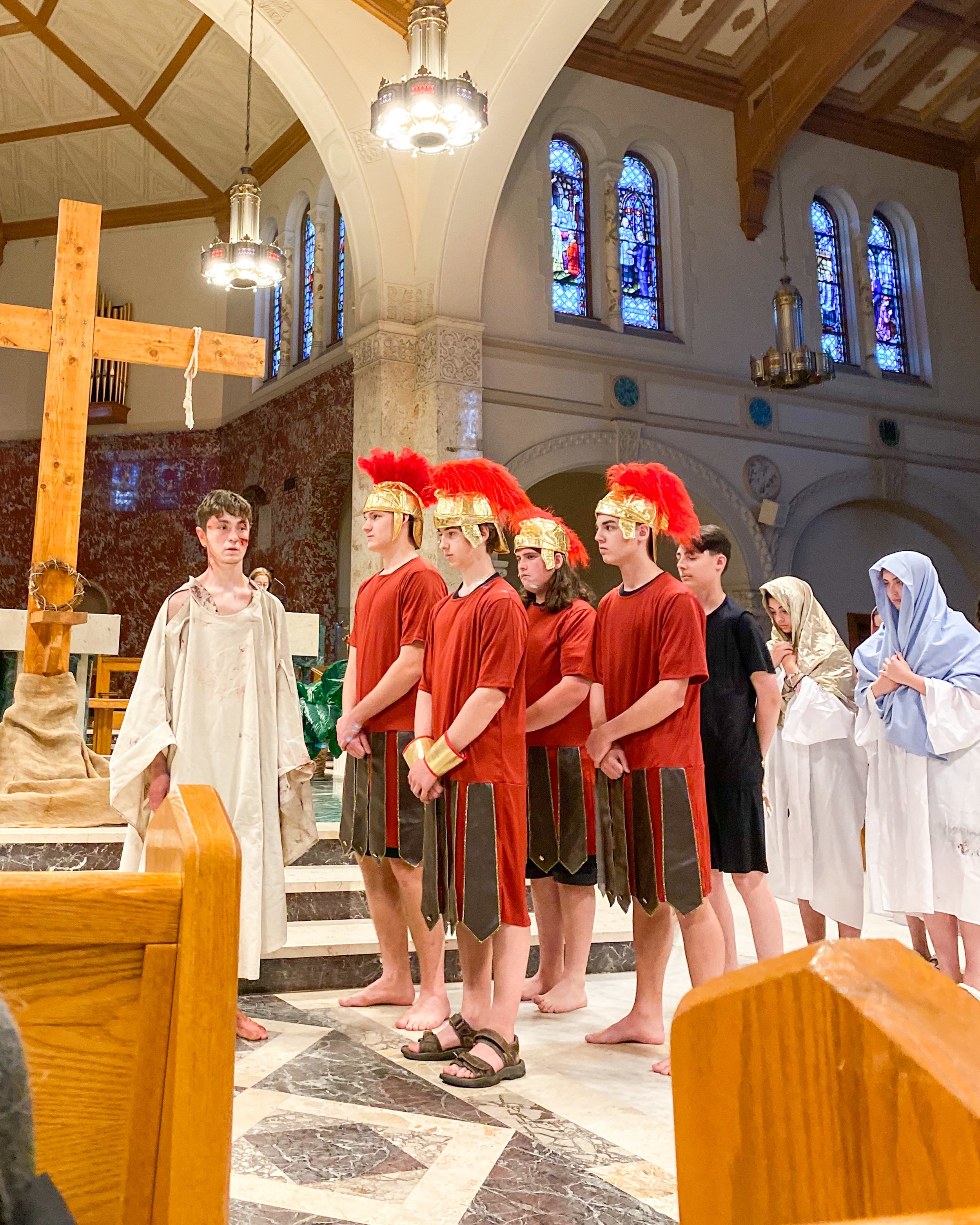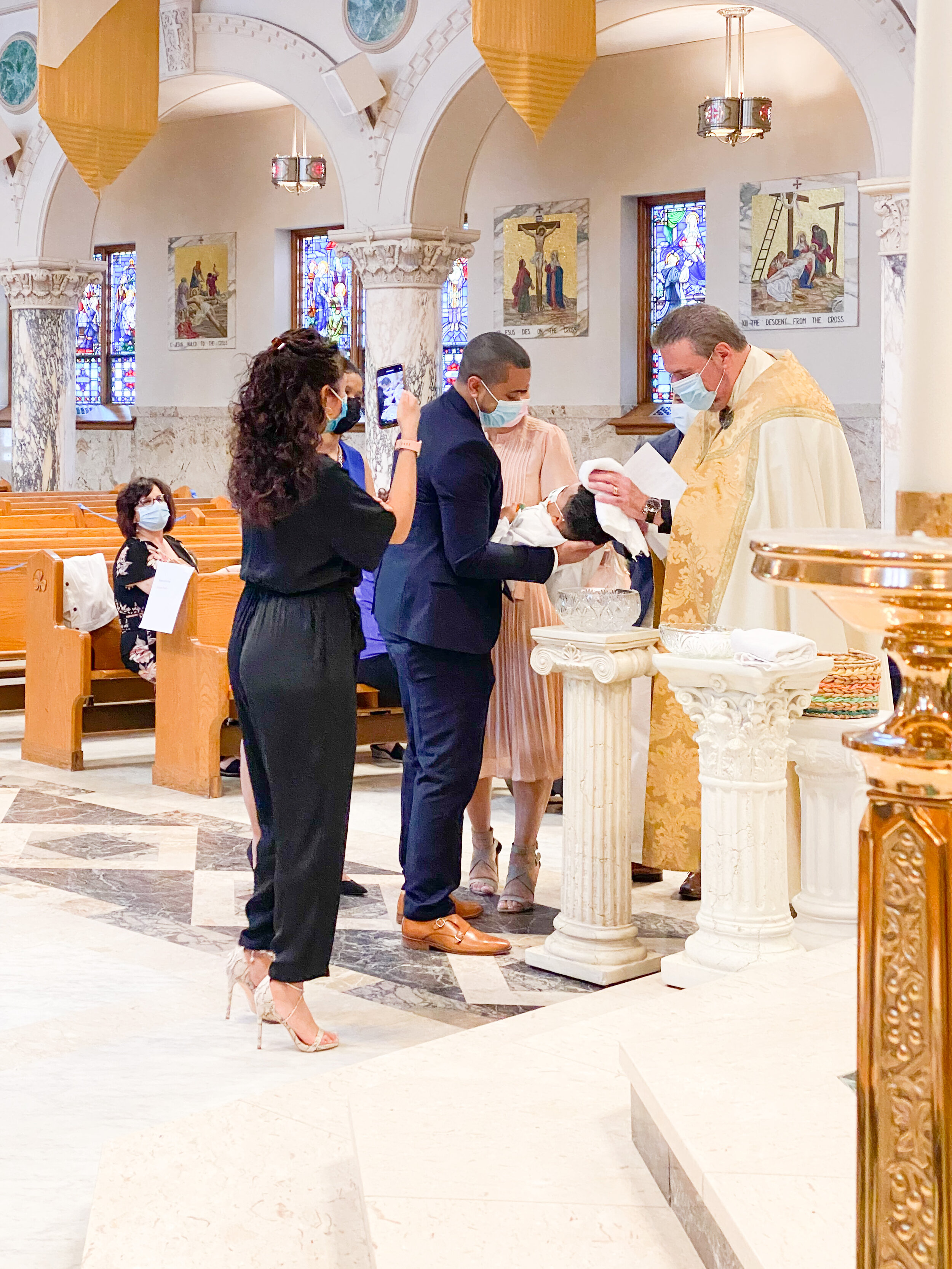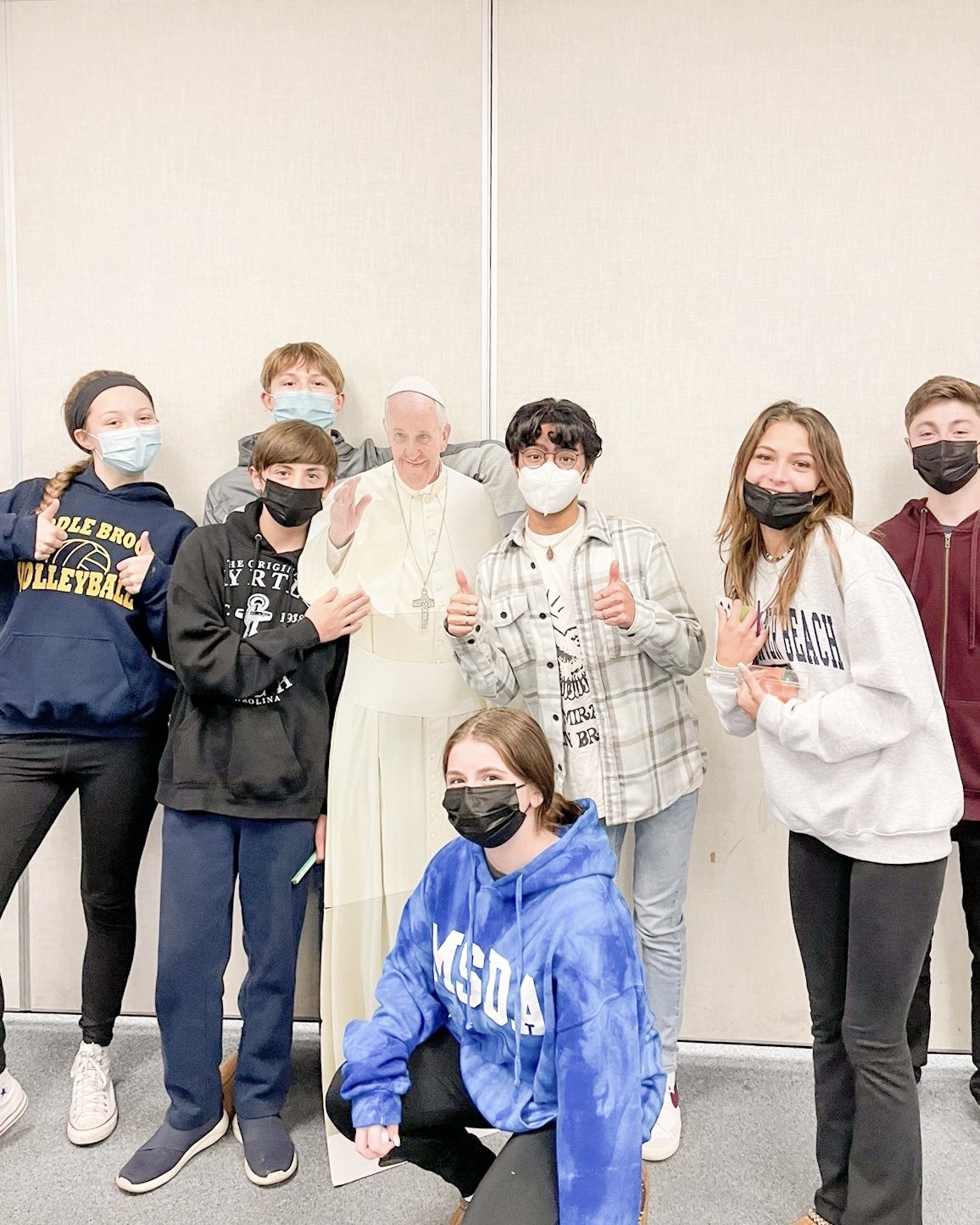
The Roman Catholic Faith Community of St. Thomas the Apostle recognizes God's call to be a sign of His Kingdom in the communities we serve.

We respond to this call by:

  • Leading people to a deeper relationship with Christ by providing opportunities for spiritual growth, renewal, education, the celebration of the Sacraments, and the worship of God in the sacred liturgy;
  • Encouraging a commitment to justice and to service of those in need;
  • Promoting good stewardship of our time, talent and treasure;
  • Building a community of hospitality and support in the daily living out of Christian ideals by nourishing mutual respect and understanding within our Church, our families, our community, and other faith traditions.


Pentecost

For the Jewish people, Pentecost was a feast of thanksgiving that marked the conclusion of the grain harvest; it was also a time to commemorate the giving of the law at Sinai. It was celebrated 50 days after Passover. For the first Christian believers, gathered to celebrate this feast in Jerusalem, the giving of the Holy Spirit reinvented Pentecost. It marked a new beginning: God would be present among his people not in words carved in stone, but in a whole new way, living in their hearts, and speaking through them. Just as the old feast was a time to celebrate the abundance of God's gifts by giving back to God the first fruits of the fields, so the new Pentecost celebrates the incredible abundance of God's giving, the many gifts of the Holy Spirit.

Pentecost is "the joyful conclusion of the Easter season" (Proclamation of the Dates of Easter on Epiphany). It ranks with Christmas, Epiphany, and the Ascension (see GNLYC,59). It is a day to pull out all the stops, a day for incense, processions, banners, for creative expression of the truth we celebrate: the gift of the Holy Spirit has been given to us. Jesus is here!

Pentecost is 50 Days after Easter and is known as the birthday of the Church. This year it is on May 19, 2013.

Click Here to read about Pentecost in the Bible (Acts 2)

The stained glass window is from St. Thomas the Apostle Church in Bloomfield, NJ.

STA "300 Club"

05/31/2013

St. Thomas the Apostle and your Finance Committee invite you and your friends to participate in our 300 Club.  Only 300 tickets available, each ticket costs $100.  The Raffle will be held Friday May 31, 2013.

Prizes are as follows:

1st Prize - $10,500 or 35% of tickets sold

2nd Prize - $3,000 or 10% of tickets sold

3rd Prize - $1,500 or 5% of tickets sold

Please use this link for the 300 Club Application Form

EASTER - THE 50 DAY LONG FEAST

Alleluia! Alleluia! He is Risen!

The fifty-day feast of Easter developed from the harvest feast of ancient Israel known as "Shavuot," or the "Feast of Weeks." It was a period of seven weeks (a "week of weeks") plus one day, beginning with Passover and concluding with the fiftieth day, the day of Pentecost. The fiftieth day marked the end of the barley harvest and included an offering of the first fruits. By the time of Jesus, this festival also had become a celebration of the giving of the Law on Mount Sinai.

The themes of harvest, Exodus and the Law also became part of the Christian celebration. Christians celebrated the Passover of Jesus through death to new life and the Covenant that was established in him. Images of Christ as paschal Lamb and as first fruits are the earliest Easter images used by St. Paul.

Easter was the first of our feasts to develop beyond the weekly Sunday celebration. This fifty-day period of rejoicing seems to have been adopted by all Christian communities by the second century. Within a few centuries, however, the unity of the feast began to weaken, and the resurrection, the ascension, and the descent of the Holy Spirit began to be celebrated separately. Easter and Pentecost became two separate days rather than the two names for the same fifty-day period. Only in our own time has the unity of this celebration been reestablished, at least in the liturgical books. The pastoral challenge is to reestablish it in the minds and hearts of the parish, and the best way to do that is by celebrating the whole feast well.

Easter Sunday

Easter calls us to grasp, on a deeper and more profound level, what it means to be a follower of the crucified and risen Christ. In the prayers and readings of the season, we are led each Sunday to a deeper understanding, for our lives, of what it means to be baptized into the death and Resurrection of Christ. We are called to deeper conversion - deeper immersion - into the mystery of our participation in Christ's Passover from death to life. In our own experience of the sacraments of initiation, God's power and presence in Christ made us a new creation, his chosen sons and daughters, members of his eternal reign. Easter is the time to reflect on these mysteries of our faith and to meditate on their importance for our lives of faith in the world today. The liturgical life of the season - the readings, prayers, rites, devotions - allows us and calls us to this reality.